
Follow shared state
Inspect static properties, globals and mutable singletons. Cross-file indexing connects Laravel bindings to the classes they share.
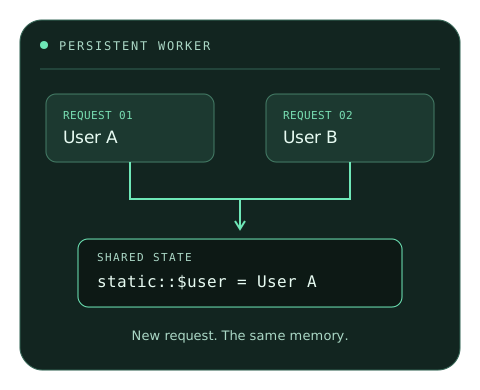
Follow shared state
Inspect static properties, globals and mutable singletons. Cross-file indexing connects Laravel bindings to the classes they share.
Understand each finding
Ten focused rules explain the risk, its location and what to review. Severity describes an analysis finding, not a confirmed production incident.
Make CI actionable
Choose a failure threshold, adopt a baseline and export SARIF to GitHub code scanning. Review accepted risks without losing the whole report.
Use your workflow
Run the standalone CLI or the Laravel Artisan command. The same analysis engine, options and output formats power both.
Install as a development dependency.
composer require --dev goktugcy/worker-safetyScan the application. No configuration file is required.
vendor/bin/worker-safety scan# In Laravel:php artisan worker-safety:scanReview the result. Start with the reported location, check the value’s lifetime and decide whether to fix or document the risk.
A risk analyzer, with clear boundaries.
A clean scan is not proof of worker safety. Runtime targets are selected, not detected, and Worker Safety does not monitor production memory. Since 1.2.0, runtime replay complements source analysis by sending HTTP requests to a running single-worker instance and observing whether one request can see another’s state.